

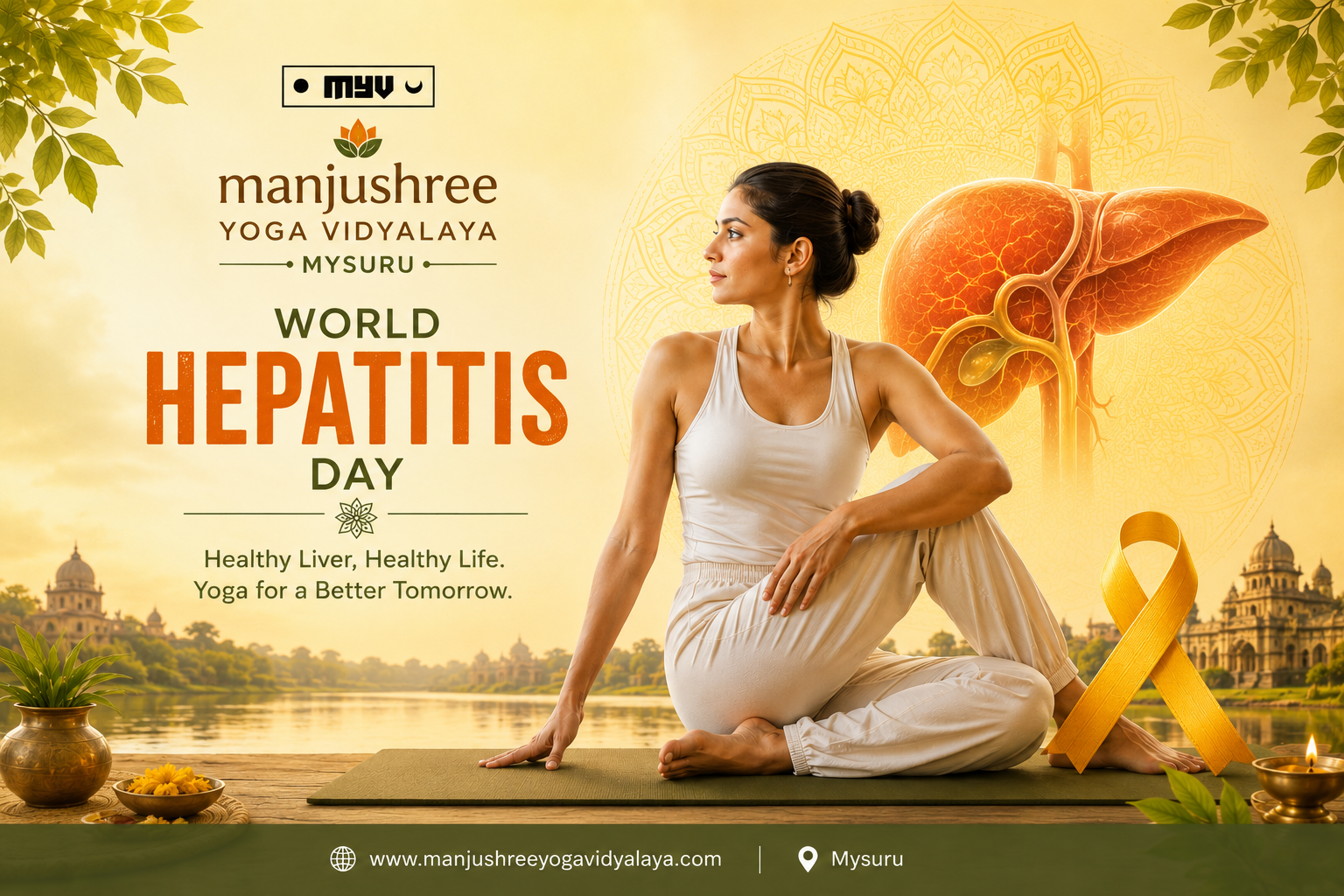
The Silent Epidemic: Understand It. Prevent It. Heal It.
By Manjushree Yoga Vidyalaya, Mysuru
287 million people worldwide live with hepatitis B or C. 1.34 million die from it every year. Yet most don’t even know they have it. That is why World Hepatitis Day exists.
What is World Hepatitis Day?
Every year on July 28, the world observes World Hepatitis Day, chosen to honor the birthday of Nobel Prize-winning scientist Dr. Baruch Blumberg, who discovered the Hepatitis B virus in 1967 and developed the first vaccine against it.
The World Hepatitis Alliance first declared was first declared on May 19, 2008 by the World Hepatitis Alliance. In 2010, WHO officially moved it to July 28. The goal is to eliminate hepatitis as a global health threat by 2030, reducing new infections by 90% and deaths by 65%. According to WHO’s Global Hepatitis Report 2026, progress is being made but is not fast enough.
When Was Hepatitis First Diagnosed?
Hepatitis has been observed for centuries, ancient physicians described ‘epidemic jaundice’ as far back as 400 BCE. But modern understanding developed much more recently:
1885: First documented outbreak of what we now call Hepatitis B — 191 shipyard workers in Bremen fell ill after a mass vaccination campaign using human lymph material.
1947: British virologist F.O. MacCallum distinguished Hepatitis A (infectious/food-water route) from Hepatitis B (blood route) — the naming system still used today.
1967: Dr. Baruch Blumberg discovered the Hepatitis B virus and developed the first diagnostic test and vaccine — earning him the Nobel Prize in 1976.
1989: Hepatitis C virus identified, finally explaining millions of unexplained post-transfusion liver disease cases.
Today: Five distinct hepatitis viruses are recognised: A, B, C, D, and E — each with different transmission, severity, and treatment.
Symptoms: The Silent Warning Signs
Hepatitis is called the ‘silent epidemic’ for a reason — most people have no symptoms until significant liver damage has already occurred. When symptoms do appear, they include:
- Persistent fatigue and unexplained weakness
- Loss of appetite, nausea, and mild fever
- Discomfort in the upper right abdomen (where the liver sits)
- Jaundice — yellowing of skin and eyes (a later sign)
- Dark urine and pale stools
- Easy bruising or bleeding
⚠️ Many people with Hepatitis B and C have NO symptoms for years. If you are in a high-risk group, get tested — don’t wait for symptoms.
Root Causes: How Does It Spread?
Hepatitis A & E — Food and Water Route
- Contaminated food or water (especially in poor sanitation areas)
- Raw or undercooked shellfish
- Poor handwashing habits
Hepatitis B, C & D — Blood and Body Fluid Route
- Sharing needles or syringes
- Unscreened blood transfusions or unsterile medical equipment
- Tattoos or piercings with unsterile tools
- Sexual contact with an infected person (mainly Hepatitis B)
- Mother to child during birth (mainly Hepatitis B)
Lifestyle Factors That Worsen Liver Health:
- Overuse of medications and painkillers
- Excessive alcohol consumption
- Obesity and high-fat, high-sugar diet
- Additionally, Chronic stress and poor sleep
Prevention Is Better Than Cure
Medical Prevention
- Vaccination: The most powerful tool. Hepatitis A and B are both vaccine-preventable. The Hepatitis B vaccine is safe, effective, and provides lifelong protection. Get vaccinated if you haven’t.
- Most importantly, get tested Especially if you are in a high-risk group. Hepatitis B and C detected early can be managed and treated effectively before serious liver damage occurs.
- Safe practices: Use only sterile needles, medical equipment, and tattooing/piercing tools.
Food, Water & Lifestyle
- Drink clean, filtered, or boiled water, especially when travelling
- Wash hands thoroughly before eating and after using the toilet
- Maintain a healthy weight, obesity significantly increases liver disease risk
- Limit or eliminate alcohol consumption
- Eat liver-friendly foods: turmeric, amla, bitter gourd, garlic, lemon water, leafy greens
- Manage stress through yoga, pranayama, and meditation
Yogic Management: Ancient Wisdom for the Liver
In Ayurveda, the liver is governed by Pitta dosha, the energy of transformation. An aggravated Pitta, caused by poor diet, alcohol, stress, and toxins, Ayurveda identifies this as the root of liver dysfunction.
Important: Yoga complements but does not replace medical treatment. Most importantly, in acute hepatitis, rest is primary.
Pranayama — Breath as Medicine
- Kapalabhati: The most powerful pranayama for liver health. 5-10 minutes daily on an empty stomach.
- Anulom Vilom: Balances the nervous system, reduces cortisol, and purifies the blood. 10-15 minutes daily.
- Bhramari: Calms the nervous system and supports immune response.
Asanas — Poses for Liver Stimulation
- Ardha Matsyendrasana (Seated Spinal Twist): The single best asana for liver and spleen health. The twist compresses and releases the liver, stimulating blood flow and bile production.
- Dhanurasana (Bow Pose): Stretches the entire abdomen, stimulates the liver, and improves digestive fire.
- Bhujangasana (Cobra Pose): Improves blood circulation to liver cells and supports the body’s natural detoxification.
- Balasana (Child’s Pose): Gentle abdominal compression with deep relaxation. Safe even during recovery.
Shatkarma — Yogic Cleansing Practices
The classical Shatkarma practices of Hatha Yoga were designed to cleanse the body’s internal systems, reducing the toxic burden that the liver must process.
Jala Neti: Nasal cleansing with saline water supports the immune system by clearing nasal passages of pathogens.
Kunjal Kriya: Voluntary stomach wash with warm saline water. Described in classical texts as supporting the digestive system and reducing toxin accumulation. Practice under qualified guidance only
Meditation & Sleep
- 20 minutes of daily meditation reduces cortisol and supports immune restoration
- Yoga Nidra (yogic sleep) is particularly powerful during illness recovery
- Prioritise 7-8 hours of quality sleep — poor sleep is directly linked to liver dysfunction
A Message from Manjushree Yoga Vidyalaya
Furthermore, the liver works silently, every moment of your life. It asks very little — clean food, clean water, less toxins, more rest. Yoga gives us the tools to honour this vital organ, not just with asanas, but with the entire yogic lifestyle.
On this World Hepatitis Day — get tested, get vaccinated, and roll out your mat. Therefore, prevention truly is better than cure.
🙏 Disclaimer: This blog is for educational purposes only. If you suspect any liver condition, please consult a qualified medical professional. Yoga and Ayurveda are supportive practices — not replacements for medical care.
— Manjushree Yoga Vidyalaya | Mysore, manjushreyogavidyalaya.com
Leave a Reply